
Helping babies build stronger protection from disease

Babies who receive antibiotics in their first days of life often have a weaker response to routine childhood vaccinations. While researchers knew there was a difference in how some babies responded to vaccines, they didn’t know what was causing it or how to strengthen their immune response – until now.
Dr Feargal Ryan at Flinders University, working in collaboration with Professor David Lynn, Professor Helen Marshall and researchers across South Australia, is helping to better understand ways to support healthy immune development when life-saving antibiotics are required.
"Antibiotics are incredibly, incredibly important. Babies are so susceptible to infections. Everyone should absolutely take them when they're needed," said Dr Ryan.
"Our goal is that when something like antibiotics comes up, and a parent is worried about the impact on the health of their baby, a GP will be able to tell them, 'It'll be fine, because we can mitigate it.'"
Protecting our most vulnerable patients
Understanding how to achieve the best possible response to vaccines is important for protecting our most vulnerable patients.
“Babies are the ones where the vaccines are the most important because their immune systems are still developing,” said Dr Ryan.
"If we can improve vaccine responses by three or five per cent, that might not sound like much. But when you scale that across millions and millions of people, that becomes a very large difference."
Linking the gut microbiome with infant immunity
Scientists are increasingly discovering that the gut microbiome – the trillions of microbes living in our digestive system – plays an important role in shaping our immune system and influencing how we respond to disease.
Supported by a Flinders Foundation Health Seed Grant, Dr Feargal Ryan and his team at Flinders University set out to better understand that connection and have identified an important link between the gut microbiome and immune response.
Using advanced technology, the team created one of the most detailed maps of the infant immune system ever generated, analysing more than 100,000 individual immune cells.
They discovered that infants exposed to antibiotics showed changes in a critical immune cell called the dendritic cell – the immune system’s “scouts” that identify threats and instruct the rest of the immune system how to respond.
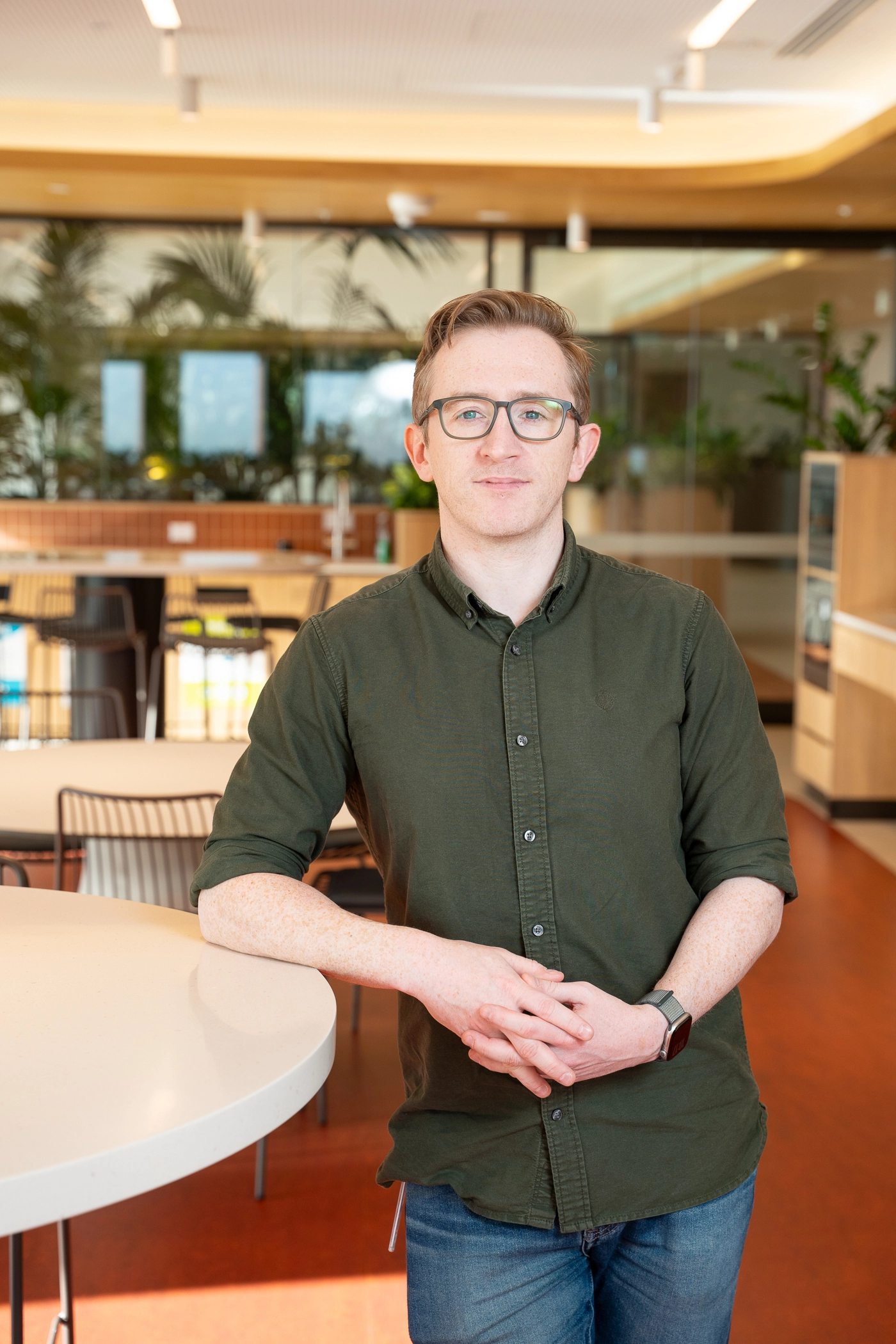
"The babies that get antibiotics – their dendritic cells appear to not work as well," Dr Ryan said.
For researchers, this discovery represents much more than a scientific finding.
It provides a clearer understanding of what may be happening inside the immune system and gives researchers a specific target for future studies aimed at improving infant health.
"We knew there was a difference," Dr Ryan said.
"What we didn't know was what was causing it."
The findings are already helping shape the next phase of research, including studies investigating whether probiotics could help support healthy immune development in babies exposed to antibiotics early in life.
This is what community support makes possible
This discovery was only made possible through the latest Health Seed Grant Round, supported by Flinders Foundation supporters. The Grant Round enables researchers to generate the early evidence needed to investigate a promising idea.
“We often don’t know where the next big breakthrough is going to come from,” said Dr Ryan.
“Before researchers can compete for major national funding, we need proof that an idea works. We need evidence. We need data. Philanthropy makes sure we've got that foundation in place."
For Dr Ryan, donor support is also an investment in the people behind the discoveries.
“Sometimes philanthropy gives scientists that lifeline. It stops them from leaving research and keeps them working on how we can make sure babies are healthier.”
By supporting researchers at critical stages of their careers, Flinders Foundation donors are helping create the conditions for future breakthroughs in child health.
Thanks to the generosity of supporters, researchers are uncovering new knowledge about how babies build protection against disease and creating new opportunities to improve health outcomes for children and families.
Every breakthrough starts somewhere. When you support Flinders Foundation, you help researchers to drive medical discoveries like this forward.
Support exceptional research and care. Donate now.
Research participants needed for further study
Thanks to these findings, researchers are now investigating if a probiotic intervention can enhance immune responses to vaccination in babies who have been treated with antibiotics.
If you have or know of a healthy newborn baby that has received antibiotics in the first 28 days of life, you can help researchers further their knowledge and improve vaccine responses in babies.
To learn more, visit their website.
More stories about


Keep up to date
Subscribe to our newsletter to receive information on our latest news and events

Precinct partners



Head office
Flinders Drive
Bedford Park 5042 SA
General enquiries



Flinders Foundation acknowledges the Kaurna people as the traditional custodians of the land on which the Flinders precinct was established. We acknowledge the Kaurna people’s deep and ongoing connection to land, waters and community, and pay our respect to their Elders, past and present.