
From the bench to the bars – Pedalling towards better cancer care

What do artificial intelligence, exercise, and cycling have in common? For A/Prof Ash Hopkins, they’re all part of a vision to give cancer patients and clinicians personalised treatment options and improved quality of life. Thanks to your support through Tour de Cure, that vision is becoming a reality.
Ash leads a lab focussed on clinical epidemiology and artificial intelligence (AI) to help cancer patients make more informed decisions.
“Our work is about giving patients precise information about their medications and treatments so they can make informed decisions that improve their quality of life”, explains Ash.
“We’ve identified that patient-reported outcomes can strongly predict survival and quality of life, and we’re leveraging clinical trial data to improve personalised care.
This unique way to gain additional insights from patients helps oncologists to make decisions that improve care.”
Exploring AI safety
Ash and his team are also exploring how AI fits safely into cancer care, examining how AI tools handle cancer-related information.
While they’ve found that AI has a growing ability to deliver quality insights, there is a need for better safeguards against disinformation.
“Ultimately, we want patients to have the best information for shared decision-making and optimal treatment selection”, said Ash.
Exercise and cancer care – How cycling may help cancer patients
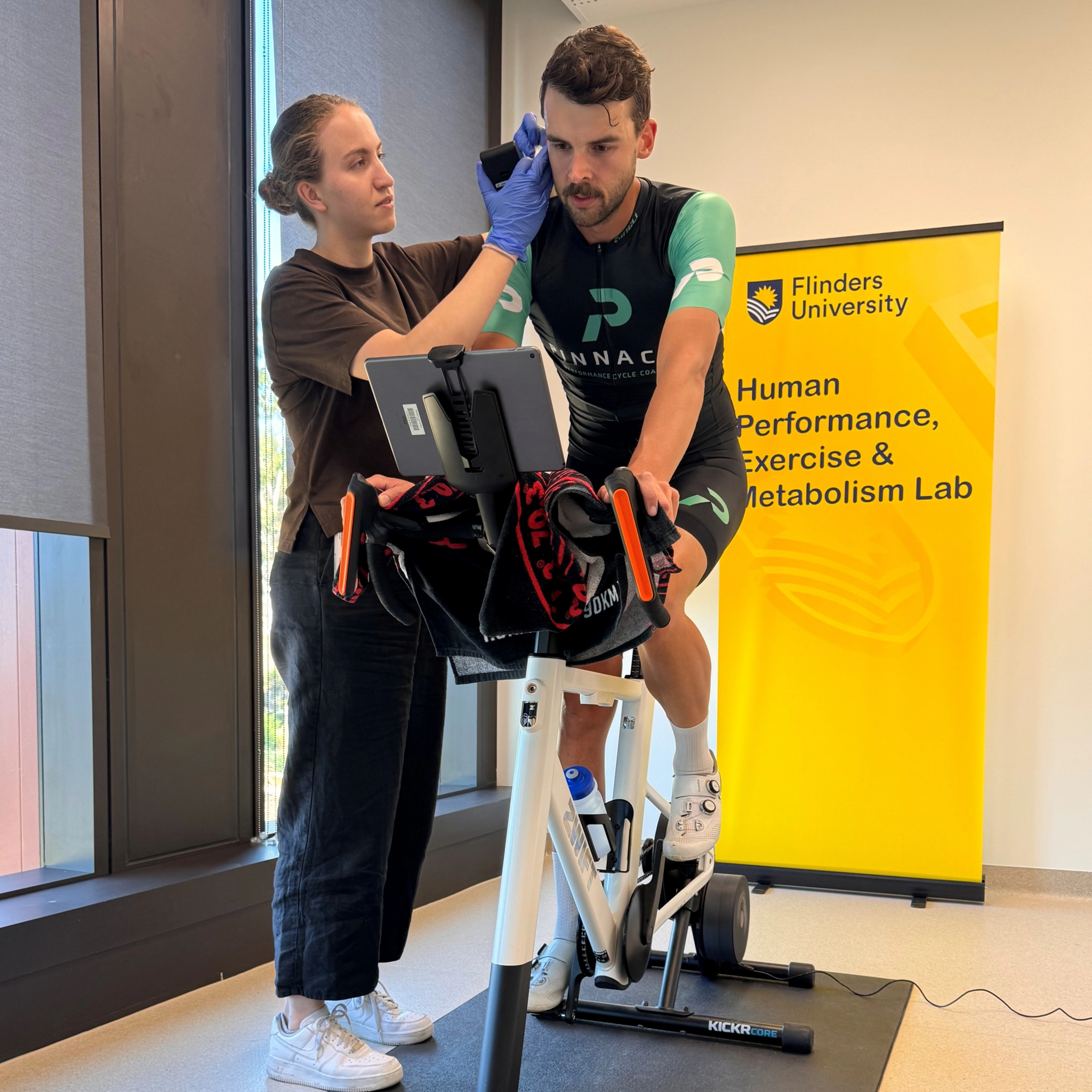
The benefits of exercise for people with cancer is also central to Ash’s work, leading to a community cycling initiative at Flinders.
“We are undertaking research into how cycling and exercise can reduce fatigue and enhance quality of life for cancer patients”, said Ash.
Findings from this research suggest that regular cycling, even at a recreational level, can provide meaningful health benefits for people with cancer. It showed that recreational cyclists showed consistently better fitness and metabolic profiles than non-cyclists.
“In practical terms, taking up cycling, or maintaining it during and after treatment, may help cancer patients to build strength, fight fatigue, and improve long-term survival prospects.”
Riding with Tour de Cure connects community with research
Beyond the research, Ash is a passionate rider and familiar face on the Tour de Cure SA Discovery Tour, having completed the challenge four times.
“Each ride is a unique experience, a chance to connect with the community, and an opportunity to enjoy the SA countryside while making life-long friends.”
Ash is looking forward to burning off some winter calories for the 2026 edition in February and reconnecting with friends, old and new.
For those thinking about taking part, Ash has some advice.
“Just start! The community is incredibly supportive.
It’s an experience you’ll want to repeat once you’ve tried it. It’s rewarding in so many ways.”
Learn more about the 2026 Tour de Cure SA Discovery Tour and be part of the ride that changes lives.
Every kilometre, every rider, and every donation helps fuel exceptional research and care for people with cancer at Flinders.
More stories about


Keep up to date
Subscribe to our newsletter to receive information on our latest news and events

Precinct partners



Head office
Flinders Drive
Bedford Park 5042 SA
General enquiries



Flinders Foundation acknowledges the Kaurna people as the traditional custodians of the land on which the Flinders precinct was established. We acknowledge the Kaurna people’s deep and ongoing connection to land, waters and community, and pay our respect to their Elders, past and present.