
Powering new hope for men with prostate cancer

At its heart, medical research is about people.
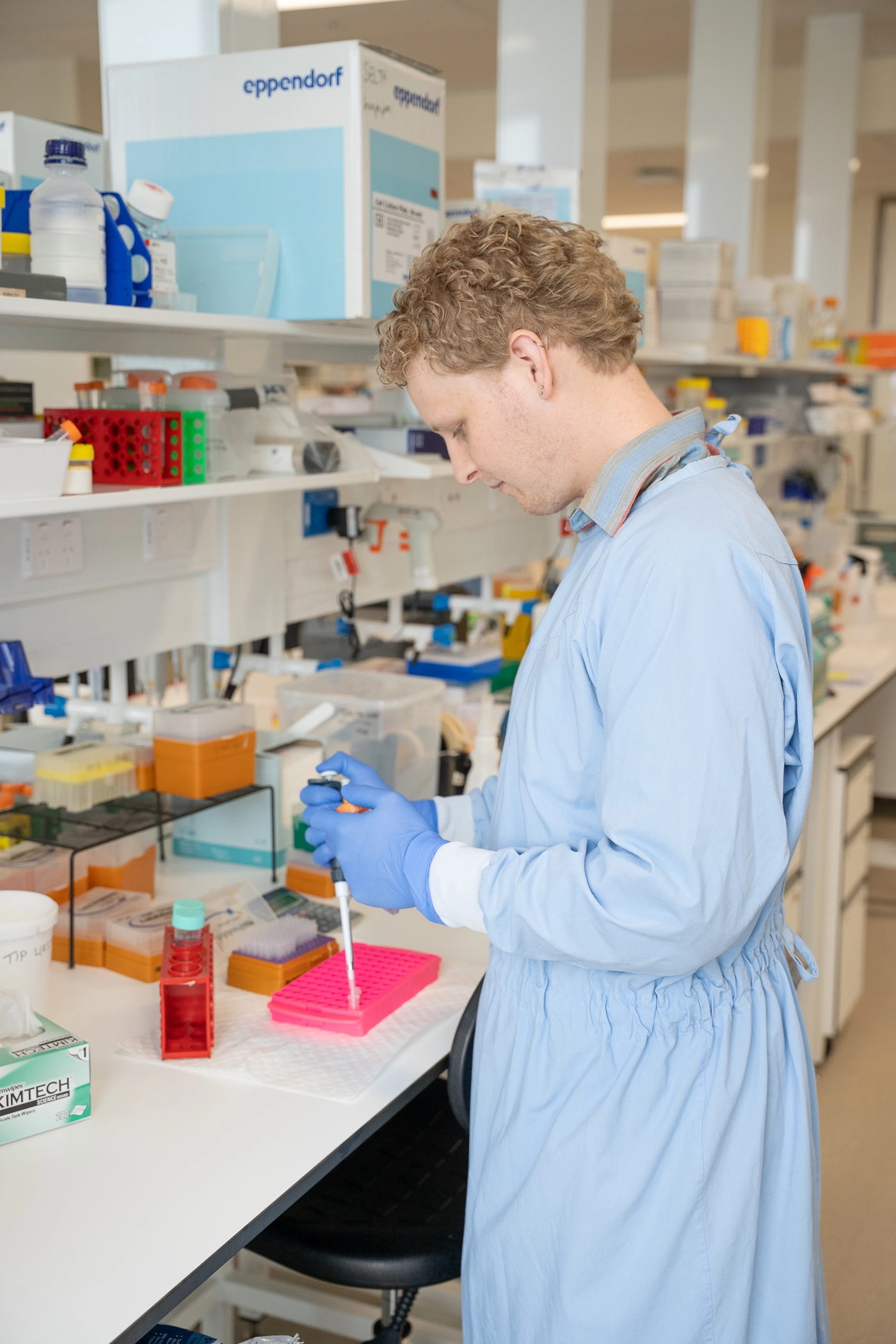
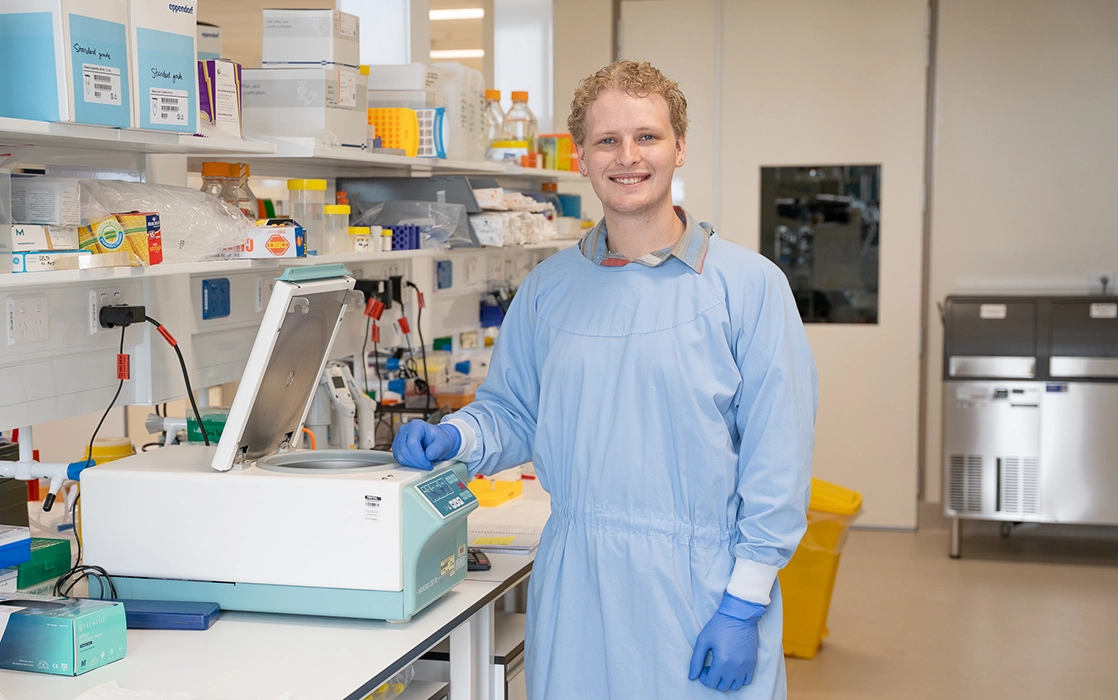
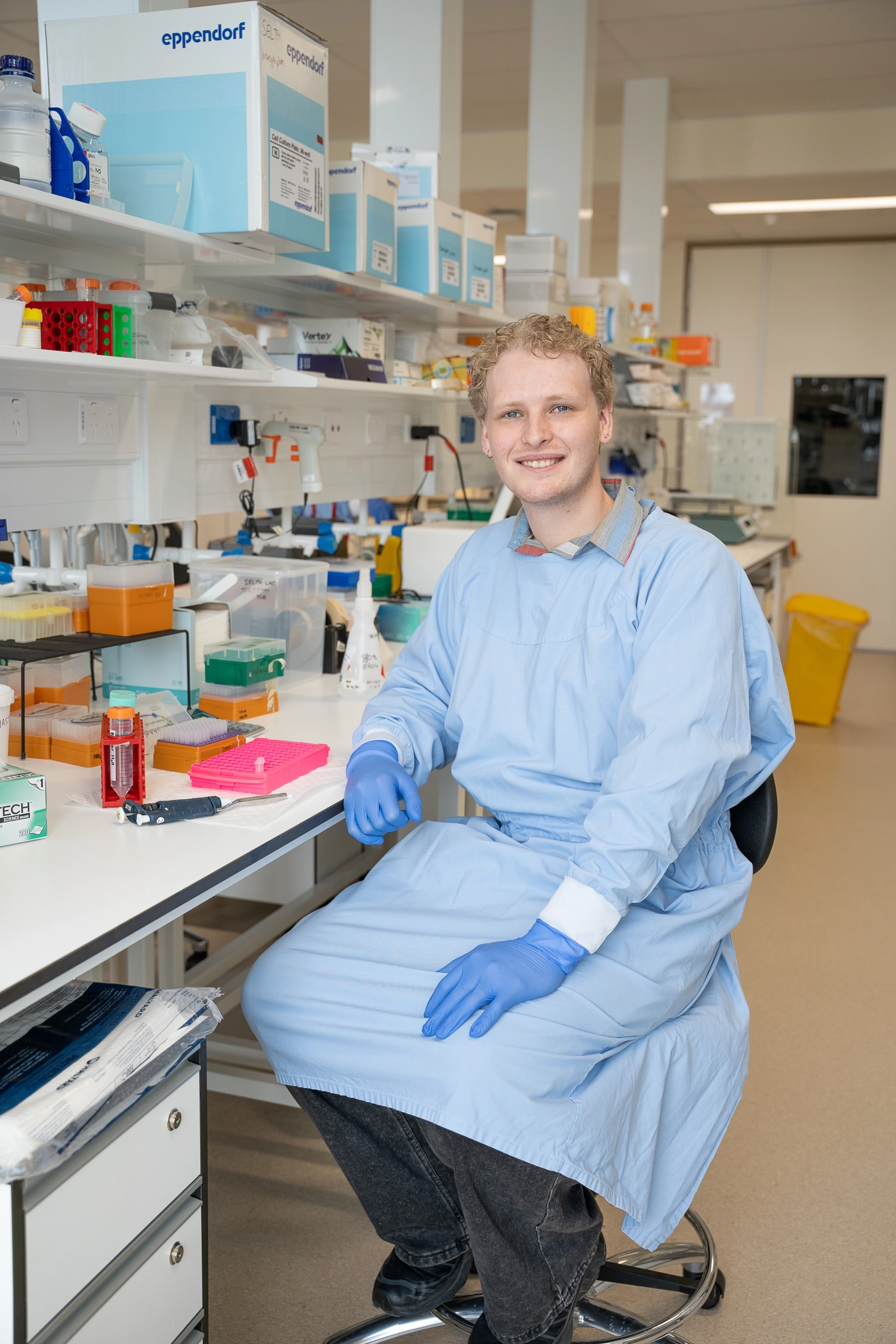
A generous bequest from former Flinders patient Ralph and his wife Pixie is driving cutting-edge prostate cancer research — funding a PhD scholarship for emerging cancer researcher Travis Croft.
“I’m incredibly humbled to receive a scholarship generously funded by a grateful patient, which allows me to follow my dream of becoming a cancer researcher,” Travis says. “I am immensely grateful for the generosity of Ralph and Pixie, and I hope to honour Ralph’s legacy by making a meaningful impact on the lives of men affected by this devastating disease.”
Tackling an incurable disease
Travis is a member of the Prostate Cancer Research Group led by Professor Luke Selth at Flinders University. The group is dedicated to improving outcomes for men with prostate cancer, particularly those with metastatic disease.
While early-stage prostate cancer can often be managed successfully, metastatic prostate cancer, when the disease spreads beyond the prostate, remains incurable.
“As it currently stands, metastatic prostate cancer is incurable,” Travis explains. “Current therapies significantly impact quality of life, and because they’re not curative, men remain on treatment for the rest of their lives.”
These treatments suppress testosterone production, a necessary driver of prostate cancer growth, but can have substantial physical and emotional side effects.
The urgent challenge is clear: develop therapies that not only extend life but also maintain its quality, and ultimately prevent or cure lethal disease.
A new generation of drug strategies
In simple terms, Travis’ PhD is investigating a new class of drugs known as cyclin-dependent kinase 4 (CDK4) inhibitors.
“These drugs block a key pathway within tumour cells that allows them to grow uncontrollably,” he says.
But their potential may extend even further.
Immunotherapy has revolutionised treatment for cancers such as melanoma and lung cancer by harnessing the body’s own immune system to attack tumour cells. Yet in prostate cancer, immunotherapy has largely failed to produce lasting responses.
Travis and the team are investigating whether CDK4 inhibitors can change that.
“Alongside slowing tumour growth, these drugs may make prostate tumours more responsive to immunotherapy,” he explains. “That’s an exciting prospect because immunotherapy regimens have induced long-term remission in other cancers — but not yet in prostate cancer.”
Breakthrough progress in 2025
Last year marked a major milestone for the Prostate Cancer Research Group at Flinders.
“We’ve made tremendous progress in 2025,” Travis says. “Our most exciting discovery is that CDK4 inhibitors appear to stimulate an anti-cancer immune response, effectively making prostate cancer cells more visible to the immune system.”
In laboratory models, the team has also observed cooperative anti-cancer effects when CDK4 inhibitors are combined with current standard treatments.
“These findings give us confidence that CDK4 inhibitors could improve upon the current standard of care and potentially sensitise tumours to immunotherapy drugs.”
If these findings translate successfully into clinical trials, they could reshape how metastatic prostate cancer is treated.
Overcoming the biggest barriers
One of the greatest challenges in prostate cancer research is the disease’s complexity.
“No two tumours are the same,” Travis says. “Even within the same patient, metastatic tumours can be remarkably different from one another.”
This variability makes it extraordinarily difficult to determine the most effective treatment approach. Resistance can develop through multiple biological pathways, meaning therapies must be sophisticated enough to target cancer on several fronts.
Compounding this challenge is the difficulty of recreating tumour complexity in laboratory settings.
To address this, the group uses a range of cutting-edge preclinical models designed to better reflect the disease seen in the clinic — ensuring research findings are as translatable to patients as possible.
The power of philanthropy
Groundbreaking research requires more than scientific expertise — it requires sustained investment.
“Without the generosity of philanthropists like Ralph and Pixie, work like ours would not be possible,” Travis says.
Philanthropy not only provides financial support — it helps shape research priorities.
“It’s easy to get wrapped up in the biology and scientific details,” he says. “But engagement with donors and people with lived experience keeps our research focused on outcomes that truly matter to patients.”
“Our ambitious goal is to develop a treatment strategy that could ultimately cure metastatic prostate cancer,” he says. “If we achieve that, we won’t just extend lives — we’ll spare patients and their families the burden of lifelong treatment.”
For Ralph and Pixie, a gift of gratitude has become a legacy of hope.
And for the men and families facing metastatic prostate cancer, that legacy could one day change everything.
Change lives through your Will
Learn more about how you can leave a legacy of hope.
More stories about


Keep up to date
Subscribe to our newsletter to receive information on our latest news and events

Precinct partners



Head office
Flinders Drive
Bedford Park 5042 SA
General enquiries



Flinders Foundation acknowledges the Kaurna people as the traditional custodians of the land on which the Flinders precinct was established. We acknowledge the Kaurna people’s deep and ongoing connection to land, waters and community, and pay our respect to their Elders, past and present.