
Fast answers, close to home: New ultrasound enhancing care for people with Inflammatory Bowel Disease

Thanks to the kindness of Flinders Foundation supporters, including The Grand Lodge of Freemasons SA & NT, a new intestinal ultrasound machine at Flinders Medical Centre is helping to change that.
The new machine is funded through the Southern Adelaide Local Health Network (SALHN) Biomedical Equipment Grant Round, an annual round supporting the purchase of additional biomedical equipment to support innovations in health care.
For Dr Patricia Kaazan and the IBD team, the new technology means patients can be assessed during their initial appointment, helping them understand what is happening earlier and begin a conversation about treatment sooner.
“This machine means our IBD patients get answers, and often a treatment plan, in the time it used to take just to get a scan booked,” Dr Kaazan said.
Faster and easier access to the answers they need
For many people with IBD, understanding what is happening with their condition can involve a GP referral, a colonoscopy and a follow-up appointment to discuss the results.
Intestinal ultrasound provides another way to assess bowel inflammation, helping the team see whether there is active inflammation and where it is located — often during the same appointment.
That means patients can have a conversation about their treatment sooner, without always needing to wait for a colonoscopy or another scan.
“For someone who has been unwell and anxious about what is going on, that is a meaningful difference — less waiting, less uncertainty,” Dr Kaazan says.
The ultrasound is also non-invasive. It does not require bowel preparation or sedation, making it a more convenient option for some patients and supporting regular monitoring of their condition.
“For patients who are needle-phobic, who have had a bad experience with prep, or who simply cannot take a day off to be sedated and driven home, that can be the difference between being monitored regularly and falling through the cracks.
It also frees up colonoscopy slots for other patients— for diagnosis, cancer surveillance, or complex disease.”
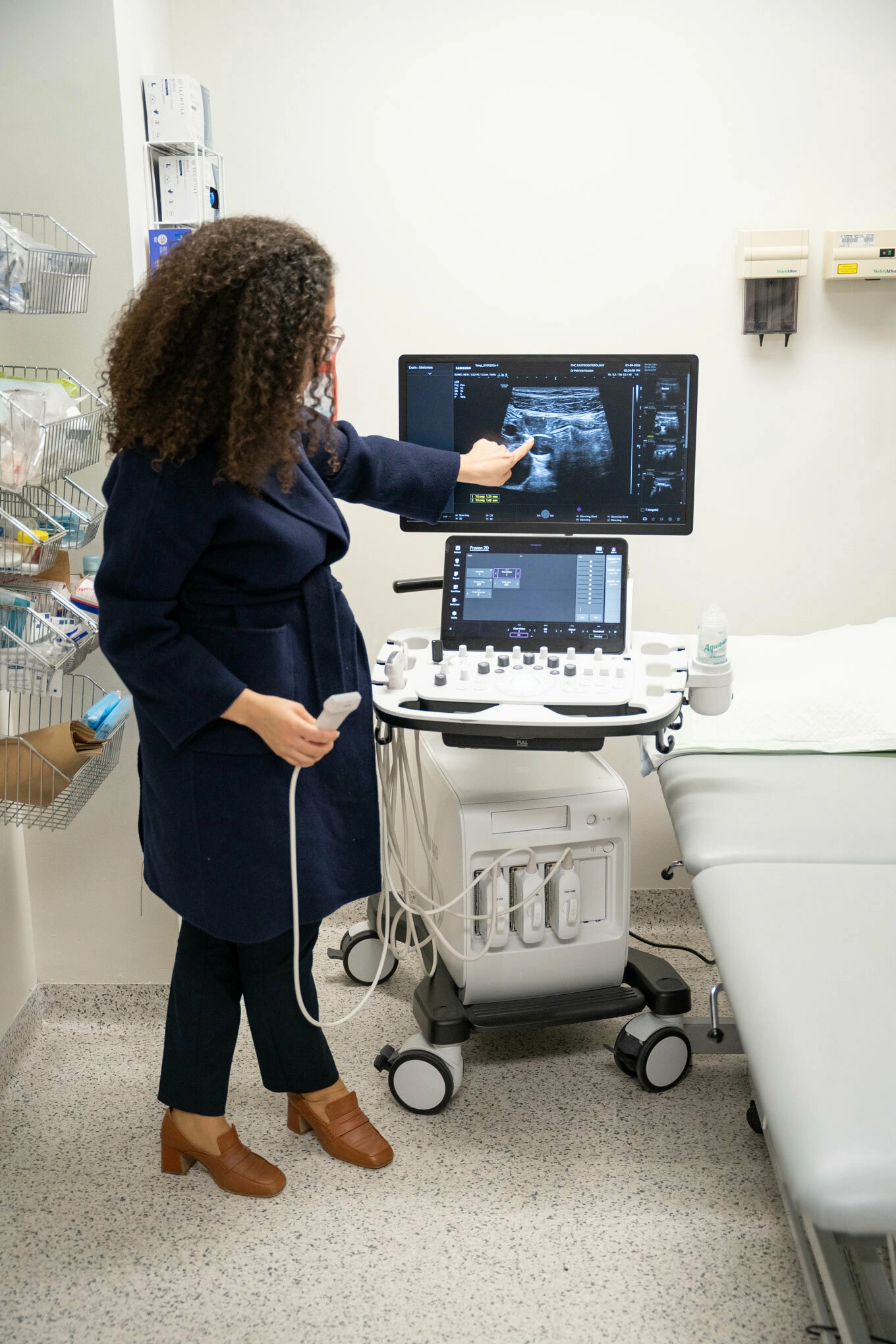
Expanding options for people with Crohn’s disease
The new machine is expected to be used by more than 2,000 patients each year, making intestinal ultrasound an important addition to IBD care at Flinders Medical Centre.
It also includes a dedicated perianal probe, which is particularly valuable for people with perianal Crohn’s disease.
This form of Crohn’s can be difficult to assess and has often required an MRI or an examination under anaesthetic to properly characterise fistulising disease.
“A dedicated perianal probe means we can assess these patients in clinic, without referring them on for imaging that can take weeks to access,” Dr Kaazan said.
For patients, that can mean more of their care happens with the same team, closer to home.
A moment of reassurance
The impact of this technology goes far beyond appointments and procedures; it’s about the relief of receiving good news right there and then.
Dr Kaazan remembers one patient who was pregnant and living with Crohn’s disease. At 12 weeks after treatment, she came in for a follow-up ultrasound.
The scan showed transmural remission — meaning the bowel wall itself had healed, not just the symptoms settling.
“She was in tears.”
“For someone who is pregnant and managing Crohn’s disease, that result provided enormous reassurance. And she had it in the room, straight away, rather than waiting days for a report.”
Your support in action
Bringing new technology into clinical care takes investment, expertise and time.
For Dr Kaazan and her team, community support has helped make this technology available to patients sooner.
“Having Flinders Foundation and the Freemasons support this technology means our patients were able to gain access to it earlier.”
The impact of that support is tangible.
“It is the difference between someone waiting weeks to find out what is going on with their gut, and knowing that day.”
That is the power of community support.
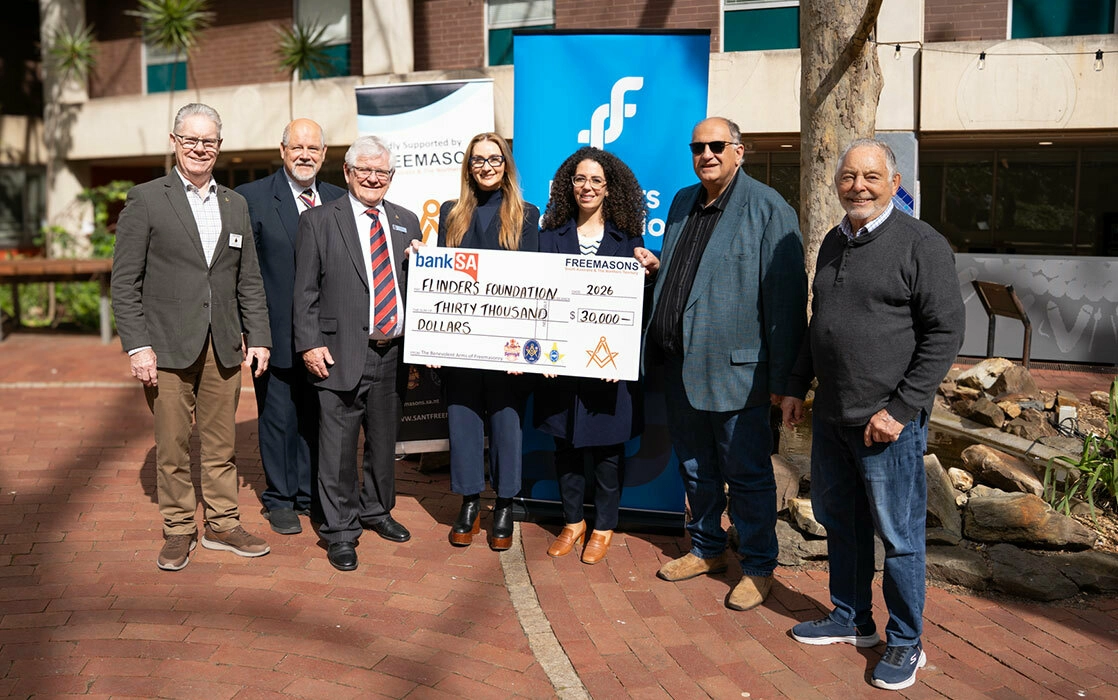
Through the SALHN Biomedical Equipment Grant round, kind Flinders Foundation supporters are helping Flinders clinicians further access innovative technology that expands the ways patients can be assessed and monitored — supporting exceptional care for people living with IBD.
For more than 2,000 patients each year, this machine represents another way to access care: with faster answers, closer to home.
Your support helps change and save lives
When you support Flinders Foundation, you help clinicians turn innovation into action that saves lives, bringing hope and healing to people and their families.
Support life-changing research and care at Flinders. Donate today.
More stories about


Keep up to date
Subscribe to our newsletter to receive information on our latest news and events

Precinct partners



Head office
Flinders Drive
Bedford Park 5042 SA
General enquiries



Flinders Foundation acknowledges the Kaurna people as the traditional custodians of the land on which the Flinders precinct was established. We acknowledge the Kaurna people’s deep and ongoing connection to land, waters and community, and pay our respect to their Elders, past and present.